
The Tiny Fire Extinguisher of the Future, with Nano Technology
Tiny in size, yet delivers full automatic protection up to 0.3 m³.

01.
24/7 Security
MFX automatically activates within seconds when the ambient temperature reaches 170°C. This passive system requires no electrical connection and provides continuous protection against potential fires, even when you are not at home or work.
02.
Compact and Solution-Oriented
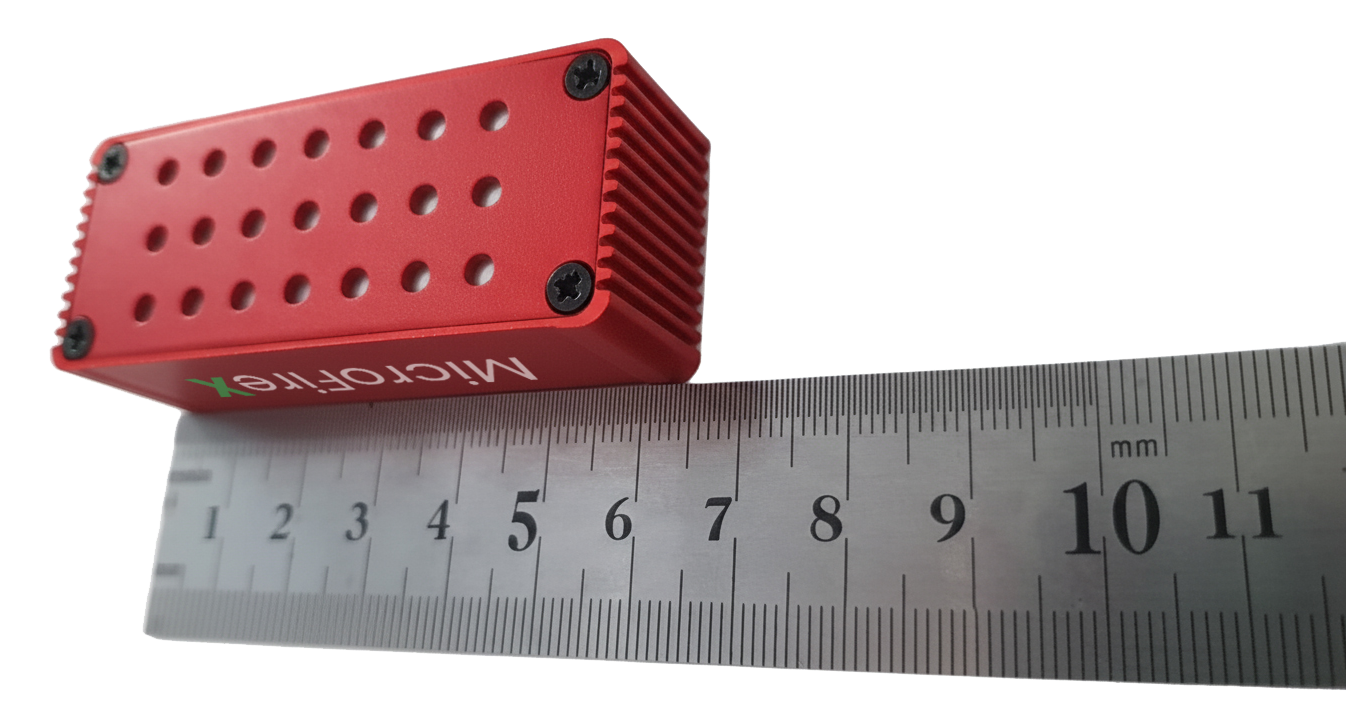
With dimensions of only 66x27x20 mm, MFX can be easily installed in narrow and high-risk areas like electrical/electronic panels, vehicle engines, and kitchen cabinets. Its compact size allows it to fit anywhere, offering comprehensive safety.
03.
Clean and Rapid Reaction
MFX’s nano-technology-driven chemical reaction extinguishes fires in as little as 5 seconds, while leaving no damaging residue like water or foam. It effectively protects an area of 0.3 m³, minimizing potential harm.
About MicroFireX
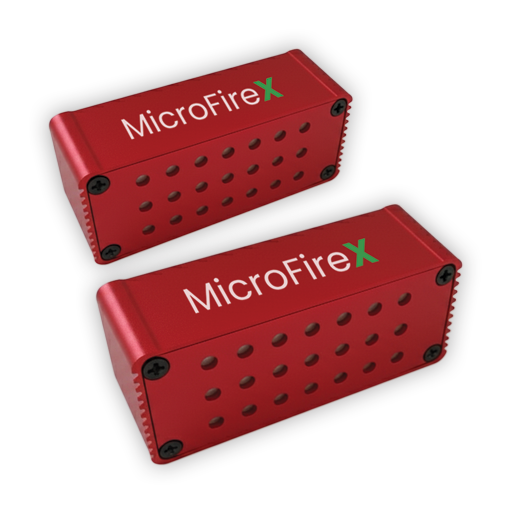
MicroFireX (MFX) is a small yet high-performance automatic fire extinguisher with a metal body, produced using nanotechnology. Unlike traditional extinguishers, MFX suppresses fires not with a physical effect, but with a chemical reaction.
The Potassium Nitrate(KNO3) and Stronsium Nitrat (Sr(NO3)2) in its contents are released into the air as nano-sized particles. These particles instantly react with the free radicals that form the flame, breaking the chain reaction necessary for the fire to continue.
It automatically activates when the ambient temperature reaches 170°C, requires no electrical connection, and extinguishes the fire in just 5 seconds. It leaves no residue like water or foam, and does not harm electronic devices.
Thanks to the adhesive tape on its back, it can be easily mounted, and with its compact design, it serves as a safety shield always at your disposal.